The following guide describes what these services really include, what their significance is in terms of safety and efficiency, how the cleaning process is performed, and what criteria have to be considered when hiring a cleaning company.
What Are Industrial Janitorial Services?
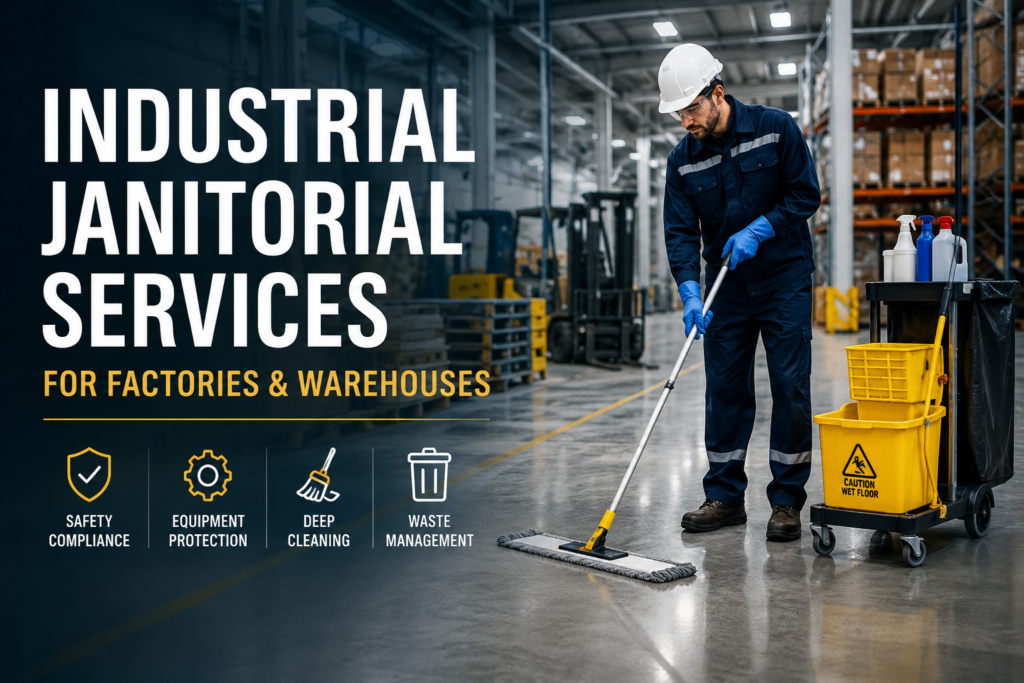
Industrial janitorial services are special cleaning programmes that are developed especially for manufacturing facilities, warehouses, distribution centres, and other similar large-scale facilities. Contrary to regular factory cleaning services, it involves special equipment, industrial cleaning materials, and professional workers who can safely clean forklifts, conveyors, and other similar devices.
It also means that the scope of services is not typical either. It involves not only such activities as mopping and sweeping but also degreasing production floors, cleaning of the dust accumulated on overhead equipment, sanitation of shared equipment, and management of waste streams that offices typically do not have. The workers are usually trained to work while machines are working and use materials that will not damage any of the equipment in the facility.
Therefore, the key reason for this service is not only the cleanliness of the facility itself, but compliance with the requirements, protection from damage to expensive equipment, and provision of good working conditions for the staff.
Why Factories and Warehouses Need Specialized Cleaning
Factories and warehouses contain dust, grease, heavy machinery, and other stuff that cannot be cleaned with the help of regular cleaning methods. Specialized cleaning helps to protect workers’ health, prevent damage to equipment and keep the air clean during every work shift.
Worker Safety and Compliance
Spilt liquids, loose debris, and blocked walkways are the most frequent reasons for workplace accidents in factories and warehouses. Regular cleaning ensures clean floors, proper marking of walkways and easy access to emergency exits, thus helping in the implementation of recommended occupational health procedures.
Equipment Protection and Uptime
Particles of dust, oil, and other contaminants not only appear aesthetically unpleasant but also settle inside machines, obstruct filtration, and wear down working parts faster than necessary. Regular cleaning in the area of machines decreases the likelihood of unexpected equipment failure and increases the service life of expensive machines.
Health and Air Quality
Industrial facilities may face problems of dust, fumes, and insufficient airflow, particularly in the case of old warehouses. In combination with cleaning practices, proper airflow is important for improving health conditions inside such facilities, and some general guidelines on industrial ventilation could be helpful when discussing how air management and cleaning practices should correlate. The employees spending their shifts in such an unhealthy environment become more likely to experience tiredness, breathing problems, and inability to concentrate.
What Industrial Facility Cleaning Services Typically Include
The process of industrial facility cleaning services usually involves floor degreasing, high dusting, machine and surface wiping, waste disposal, and washroom cleaning, all performed according to schedule and tailored to spacious rooms.
Floor Care and Degreasing
Industrial facilities have concrete floors that are constantly damaged by forklift operations, chemical spills, and oil drops. Industrial cleaning requires degreasing, scrubbing with the help of machines and pressure cleaning of the floors to prevent any accidents and make sure they are clean and slip-resistant.
Dust and Debris Control
High racks, beams, ductwork and machine covers collect dust that cannot be cleaned by regular mopping. Proper industrial cleaning requires high dusting and vacuuming to make sure that there is no dust on surfaces not reached by regular mopping in facilities that have such processes as cutting, grinding and packaging.
Machinery and High-Touch Surface Cleaning
Control panels, handrails, workstations, and shared tools get touched constantly throughout a shift. Wiping these surfaces down regularly helps limit the spread of germs and keeps equipment looking and functioning well. This is particularly important in facilities where multiple employees share the same stations across different shifts.
Waste and Debris Management
From packaging materials to production scraps, industrial sites generate a steady stream of waste. A good cleaning program includes scheduled removal and proper disposal so waste never piles up in work areas. Some facilities also need separate handling for recyclables or specific waste streams, which a cleaning provider can build into a regular pickup schedule.
Washroom and Break Room Sanitation
Even in a facility built around production, shared spaces like washrooms, break rooms, and locker areas need the same level of attention as the production floor. These are high-traffic areas that directly affect employee comfort and hygiene, and neglecting them tends to be one of the first things staff notice and comment on.
Industrial Cleaning and Commercial Janitorial Services, What Is the Difference?
They are used synonymously by many people, but there are significant differences between the two. Commercial janitorial services usually involve the cleaning of offices, shops, and smaller businesses, which include activities such as dusting, vacuuming, bathroom cleaning, and waste disposal. The risks involved are normally low; the square footage is also limited, and no special equipment is required apart from what a normal cleaning crew uses.
Industrial cleaning, however, includes all of the above plus large square footage, specialized equipment, safety compliance procedures, and substances such as grease, dust, and debris generated by production processes which cannot be found in an office environment. In such environments, the cleaning crew is usually trained in operating in situations involving forklifts and production machines, spillages and the safety procedures of the facility. When a facility consists of office and warehouse or production floors, then the two services may have to be combined in a way that they complement each other and their schedules do not clash with one another.
How to Choose the Right Industrial Cleaning Company
In case you need industrial janitorial services near me, there are several key factors to consider before signing an agreement with any of the companies. First, it is important to find out whether they are experienced in cleaning similar facilities, as a company that is used to office spaces will lack the appropriate equipment and knowledge of the procedure to clean the production floor. Also, make sure they know how to act safely in relation to the machinery and whether they have insurance for accidents with it.
Also, it is always better to know whether the schedules are flexible enough to fit yours. Many plants use multiple shifts or clean at certain time intervals, so the provider that offers industrial, manufacturing, and warehouse cleaning services depending on your schedule will cause a lot less hassle.
And finally, try to find a company willing to show you the facility before offering the price. This way, you will be sure they understand its peculiarities and the cleaning program will be more efficient.
Benefits of Hiring Professional Warehouse and Factory Cleaning Services
A properly maintained facility operates much more efficiently in almost all respects. Workers have less downtime because they are not struggling through piles of junk and can focus on manufacturing products. Machinery is less likely to wear out quickly due to the lack of dust accumulation, which will save money in the long run on maintenance. Inspections become easier when good housekeeping is in order, and the whole appearance of the facility projects positively on the company when customers or auditors come through the doors.
An additional advantage of hiring an experienced industrial cleaning company is that it allows the internal personnel to continue doing their own job and not waste time on cleaning work that they are unprepared for.
Conclusion
Facility cleaning is quite different from office cleaning, and expecting them to be the same will lead you into a minefield of issues later on. Industrial cleaning services are tailored in such a way as to address the needs and requirements that only industrial facilities can have, and that is precisely why you need it. Floor degreasing, high-level dusting, and waste disposal are just some of the ways a good cleaning service will improve your facility’s efficiency and safety.
In case you’re looking for a good cleaning program for your industrial facility, then 3SP Cleaning Care is ready to help with its professional cleaning services in all of Canada.
Frequently Asked Questions
What is included in industrial janitorial services?
Industrial janitorial services typically include floor scrubbing and degreasing, high-level dusting, machinery and surface wipe-downs, waste removal, and washroom or break room sanitation, all scaled for large facilities and coordinated around production schedules.
How often should a factory or warehouse be professionally cleaned?
This depends on the type of facility and how much dust, debris, or production waste it generates. Many facilities schedule daily light cleaning with deeper cleans on a weekly or monthly basis, adjusting frequency based on how quickly buildup accumulates in different areas.
Are industrial cleaning services different from regular commercial cleaning?
Yes. Commercial janitorial services focus on offices and retail spaces, while industrial cleaning is built for larger facilities with machinery, heavier debris, and stricter safety requirements that call for specialized training and equipment.
Can industrial cleaning be scheduled around production hours?
Most industrial cleaning companies work with facilities to schedule cleaning during shift changes, off-hours, or planned downtime so operations are not disrupted, and many can adjust the schedule as production needs change.
Why is professional cleaning important for warehouse safety?
Clean floors, clear aisles, and well-maintained equipment reduce the risk of slips, falls, and fire hazards, which supports a safer working environment for every employee on site and helps facilities stay ready for safety inspections.